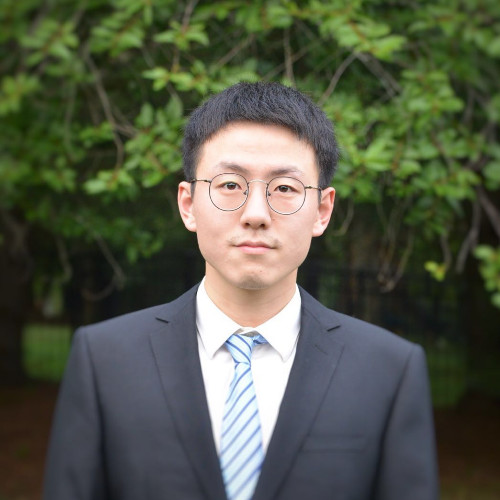
About Me
I’m currently a Postdoctoral Researcher in the Department of Endocrinology at Brigham and Women’s Hospital and Harvard Medical School, where I’m fortunate to work with Professor Alexander Turchin and Professor Marinka Žitnik on AI-driven clinical research. Starting Fall 2025, I’ll be joining the Department of Computer Science at the University of Oklahoma as an Assistant Professor.
My background spans engineering, computer science, and healthcare. I received my Ph.D. in Mechanical Engineering from the University of Tennessee, Knoxville, where I was advised by Professor Xiaopeng Zhao. Before that, I earned a B.S. in Mechanical Engineering and Applied Mathematics from Lipscomb University, and an M.S. in Computer Science from the University of Tennessee, Knoxville.
Research Interest
My research focuses on designing AI systems that support early diagnosis, rehabilitation, and personalized care for individuals with Alzheimer’s Disease and Related Dementias (ADRD). Drawing on insights from cognitive science, affective computing, and clinical practice, I explore how language, brain signals, and cognitive models can be used to develop trustworthy and adaptive AI tools. I am particularly interested in referential communication-based screening, EEG-driven neurofeedback for memory enhancement, and the use of large language models for interpreting unstructured clinical data. I also apply explainable machine learning techniques to investigate modifiable risk factors and to support individualized treatment in chronic conditions such as diabetes or mental disorders. My long-term goal is to build integrated, human-centered AI ecosystems that enhance quality of life and clinical outcomes for cognitively vulnerable populations.
For Prospective Students
I am looking for highly motivated PhD students with a background in computer science, biomedical engineering, or a related field. Ideal candidates will have experience in machine decision-making, and an interest in applying AI methods—such as optimization, learning under constraints, and human-centered modeling—to real-world healthcare problems. Prior experience with clinical trial data, neurocognitive assessment, or multimodal biomedical signals (e.g., language, brian signal) is highly desirable. If you are interested in developing explainable, trustworthy AI systems for healthcare, I encourage you to reach out to me via email at zimingliu9@gmail.com.